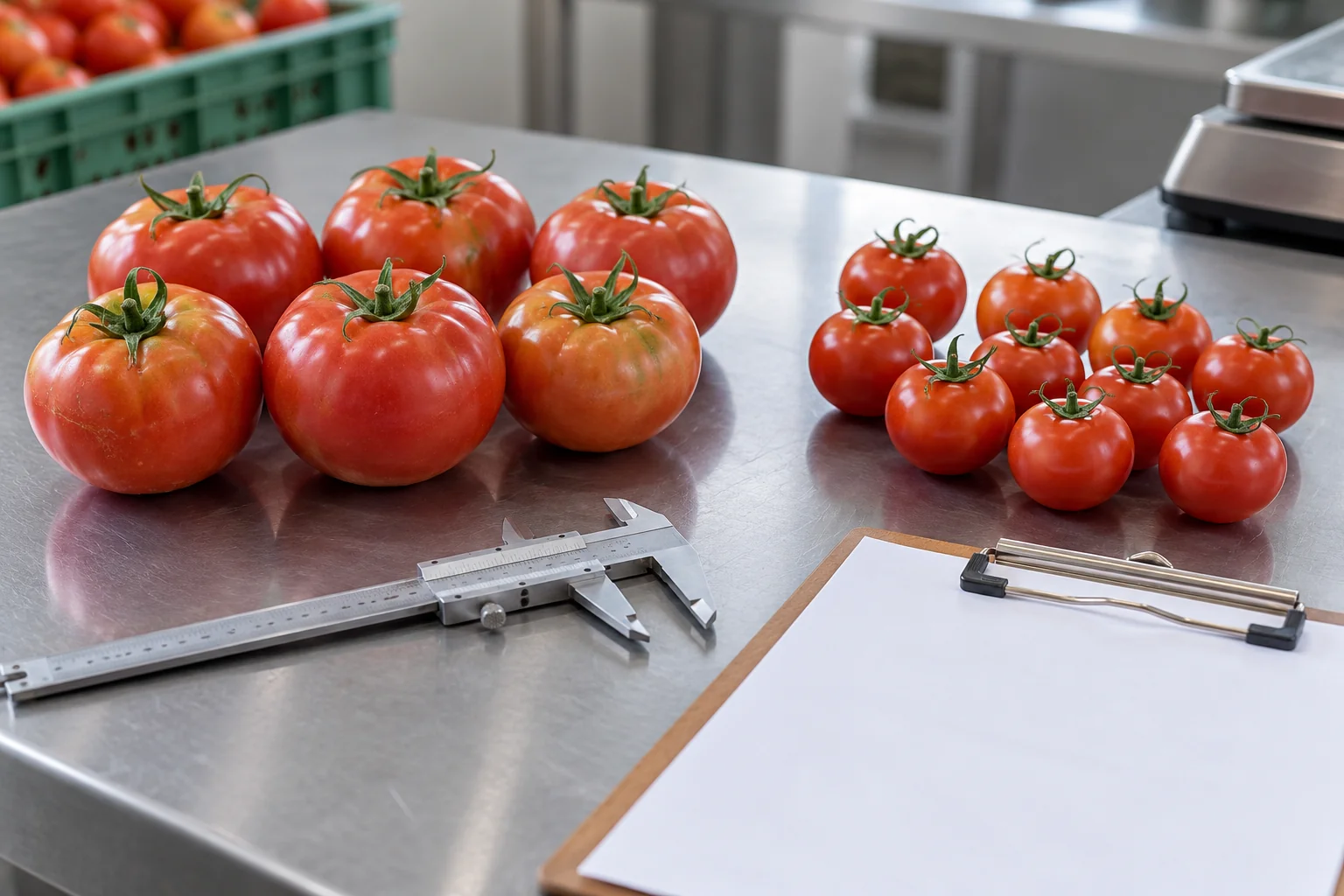
Two agricultural quotations can use the same product name and still describe different transactions. One may refer to goods leaving the farm; another may include packing and transport to a warehouse. Before interpreting the difference, establish what each price actually measures.
FAO’s agricultural prices guidance distinguishes producer, wholesale, retail and international price concepts. In particular, a farm-gate price does not include costs incurred after the product leaves the farm. These definitions are a useful starting point, but they do not make an individual quotation directly comparable to a published index.
Write down the price boundary
For each quotation, identify the point at which the goods change hands and the services included. Ask whether packing, loading, transport or other agreed charges are part of the figure. Preserve the quotation date and any validity period.
Do not infer the terms from the name of the supplier. A grower can quote a delivered service, while a warehouse can quote goods for collection. The boundary belongs to the transaction, not automatically to the participant’s usual role.
Align the product before comparing the number
Grade, quality specification, packing format and quantity affect what is being offered. A price for a selected grade is not the same observation as a price for mixed goods. Note which details are confirmed and which are still missing.
Use a comparison sheet that leaves room for uncertainty. An empty cell should prompt a question; it should not quietly become an assumed condition.
| Comparison field | What to establish |
|---|---|
| Product | Commodity, variety or agreed specification |
| Quality | Grade and the inspection basis |
| Quantity | Unit, package size and whether weight is net |
| Place | Collection point or delivery destination |
| Time | Quotation date and delivery period |
| Included costs | Packing, transport and other agreed services |
Calculate only what the evidence supports
As a simple working comparison, separately list the quoted product charge and each confirmed additional cost. Divide a total only by the quantity that the quotation actually represents. If the weight basis or a charge is unknown, keep that uncertainty visible.
This is not a complete accounting model or a forecast. It is a way to avoid comparing a partly specified offer with a fully specified one. Financing, losses, quality differences and other transaction-specific factors may still require separate treatment.
Keep a market series consistent
A repeated quotation is useful for comparison only when the team understands what stayed the same. If the grade, source, location or cost boundary changes, note the change beside the series. An apparent movement may partly reflect a different specification.
The same care applies when using a published index. Check what products and market levels it covers before treating it as an explanation of a local offer. A broad international indicator cannot, by itself, establish a particular Chinese transaction price or trader margin.
Turn the comparison into a better conversation
A useful sheet should reveal the next question: whether a specification matches, whether a delivery charge is included or whether the quotation is still valid. It should not manufacture a precise answer from incomplete terms.
Keep the original quotations with the working sheet so another person can review the assumptions. Where quality expectations are unclear, resolve the buyer–supplier specification before describing one offer as cheaper. The objective is a defensible comparison of actual terms, not a confident prediction from a small set of prices.
Source and further reading
- Prices: agricultural price concepts and data
FAO · Accessed 2026-10-13
ACA’s practical examples and working checklists are independent editorial analysis. The linked source provides the underlying reference; it does not endorse this article.