An agricultural AI pilot can produce a persuasive demonstration and still fail the first time a different person uses it. The weak point is often the handoff between an observation, the system interpreting it and the person expected to act. Before comparing models, a farm business needs to decide what a useful decision looks like and which evidence supports it.
The FAO Digital Agriculture and AI Innovation Roadmap places data stewardship, security and accountability within project governance, alongside adapting solutions to local conditions. That is a broader starting point than choosing a model from its headline accuracy. The five-question framework below is ACA’s practical application of that principle; it is not an assessment method published or validated by FAO.
1. Can two people identify the same field?
Ask an operator and an analyst to find the same field in the records without speaking to each other. If one searches by a nickname and the other by a changing spreadsheet row, the system needs an identifier that survives a change of software or staff.
Separate the identity of the field from its current crop and management zone. Keep a short map of any renamed or split areas. A model cannot reliably join a photograph, an inspection and a work order if each refers to a different version of the location.
2. Does every observation carry its context?
A number alone is a weak input. An observation should say when and where it was made, the unit, the method and whether it was measured or estimated. Record a missing value as missing rather than using zero to make a chart look complete.
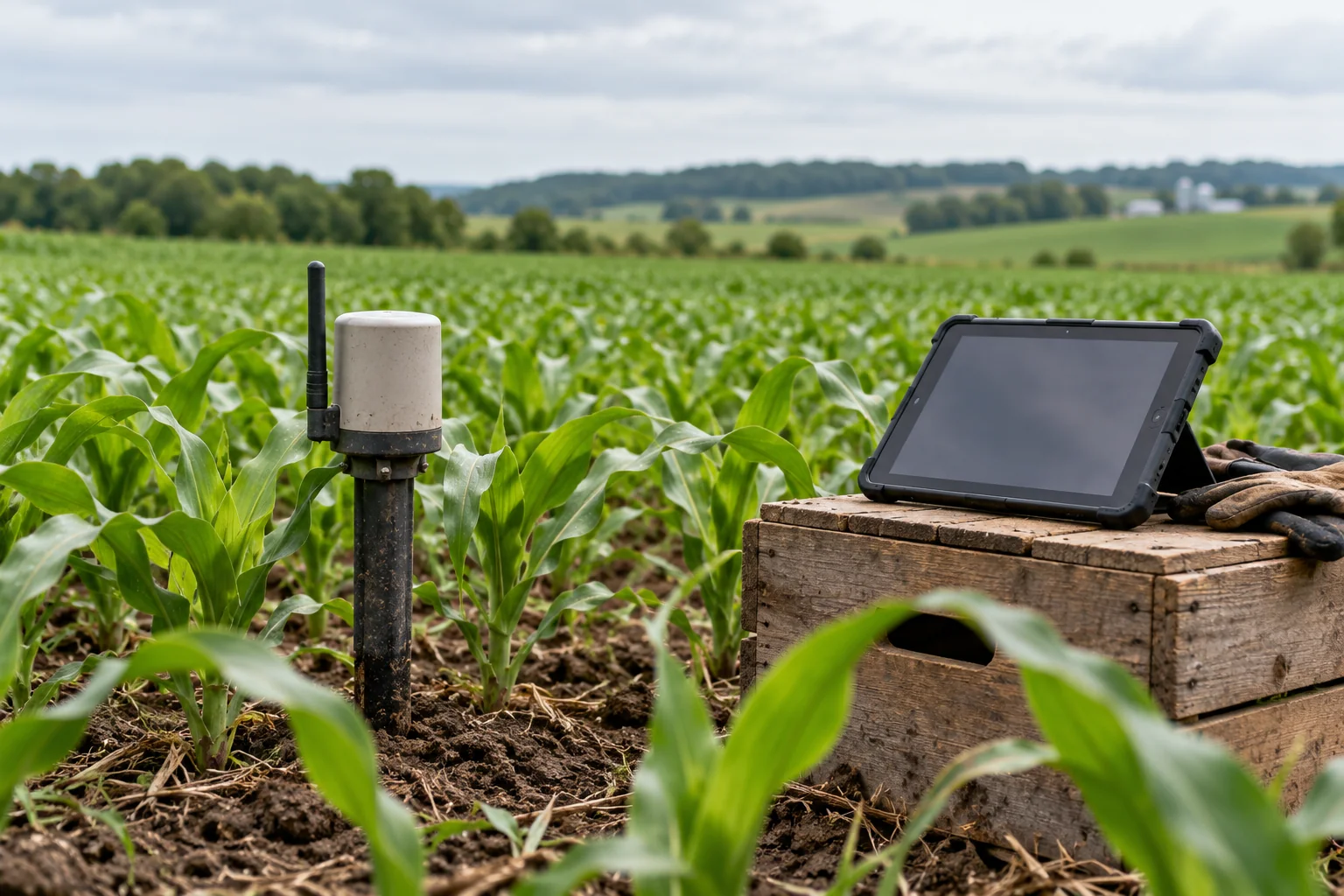
Consider a hypothetical irrigation pilot receiving both sensor readings and manual notes. A manual observation from the field edge should not silently replace a sensor reading from another position. Preserve both records and let the reviewer see the difference.
3. Is there an owner for an uncertain result?
Write down who checks a recommendation before it changes an operation. Give the team a way to record disagreement and retain the evidence available at the time. An override without a reason is hard to learn from; a reason without the original output is equally incomplete.
| Readiness question | A useful piece of evidence |
|---|---|
| Which decision is the pilot supporting? | A one-sentence decision brief |
| Which records are allowed as inputs? | A named dataset and an owner |
| Who can challenge an output? | A review and escalation contact |
| What happens if the tool is unavailable? | A workable manual process |
4. Can the farm take its records elsewhere?
Before committing to a service, ask for a sample export. Check whether field identifiers, units, timestamps and notes remain understandable outside the vendor interface. Clarify who can access the data and how corrections are retained.
This is a procurement question, not a request to build a sophisticated platform. A readable export and a clear explanation of access rights can reveal more than a polished sales presentation.
5. Can the pilot be judged against the old workflow?
Choose a small task and document how it is currently completed. Compare the effort needed to collect inputs, review exceptions and communicate a decision. Include the work transferred to farm staff, not just time saved by the model.
For China-focused operations, local field conditions, language and service arrangements should shape the trial. The global roadmap does not establish that a particular system will perform well on a particular farm. Keep the scope narrow enough to learn why a result was useful or why it failed.
The next step is a short readiness meeting with the people who create and use the records. Resolve one broken connection before adding another layer of automation. For related operational context, see our guide to irrigation records.
Source and further reading
- Digital Agriculture and AI Innovation Roadmap
FAO · Accessed 2026-10-13
ACA’s practical examples and working checklists are independent editorial analysis. The linked source provides the underlying reference; it does not endorse this article.