A food lot hold record should answer a straightforward question long after the immediate issue has passed: why was this material controlled, what happened while it was controlled, and who decided what could happen next?
That record is more than a label on a pallet or a blocked inventory status. It is the decision trail connecting a concern to containment, review, evidence, authorisation and final verification. When the trail is incomplete, a later reviewer may see that a lot was released or disposed of without being able to understand the basis for that outcome.
A workable food lot hold record does not need to predict the final decision at the moment a concern is found. It needs to preserve the known facts, prevent unintended movement, assign ownership and make the remaining question visible.
Start the record when the lot is put on hold
Open a unique hold record as soon as a team member decides that material should not move through its normal route. Do not wait for an investigation to be complete. Waiting can leave a gap between the physical control of the material and the documented reason for that control.
Traceability guidance from the Institute of Food Technologists identifies item identification, quantity, location and status as useful record elements. Its examples of status include quality hold and material not available to ship. Those concepts are useful for a hold record because they connect the paperwork to the actual inventory position.
The initial entry should establish:
- a unique hold ID;
- the date and time the hold was initiated;
- the person or function that raised the hold;
- the affected product, material or packaging description;
- the lot, batch or other applicable identifier;
- the current location and quantity; and
- the status applied in the inventory or warehouse control system.
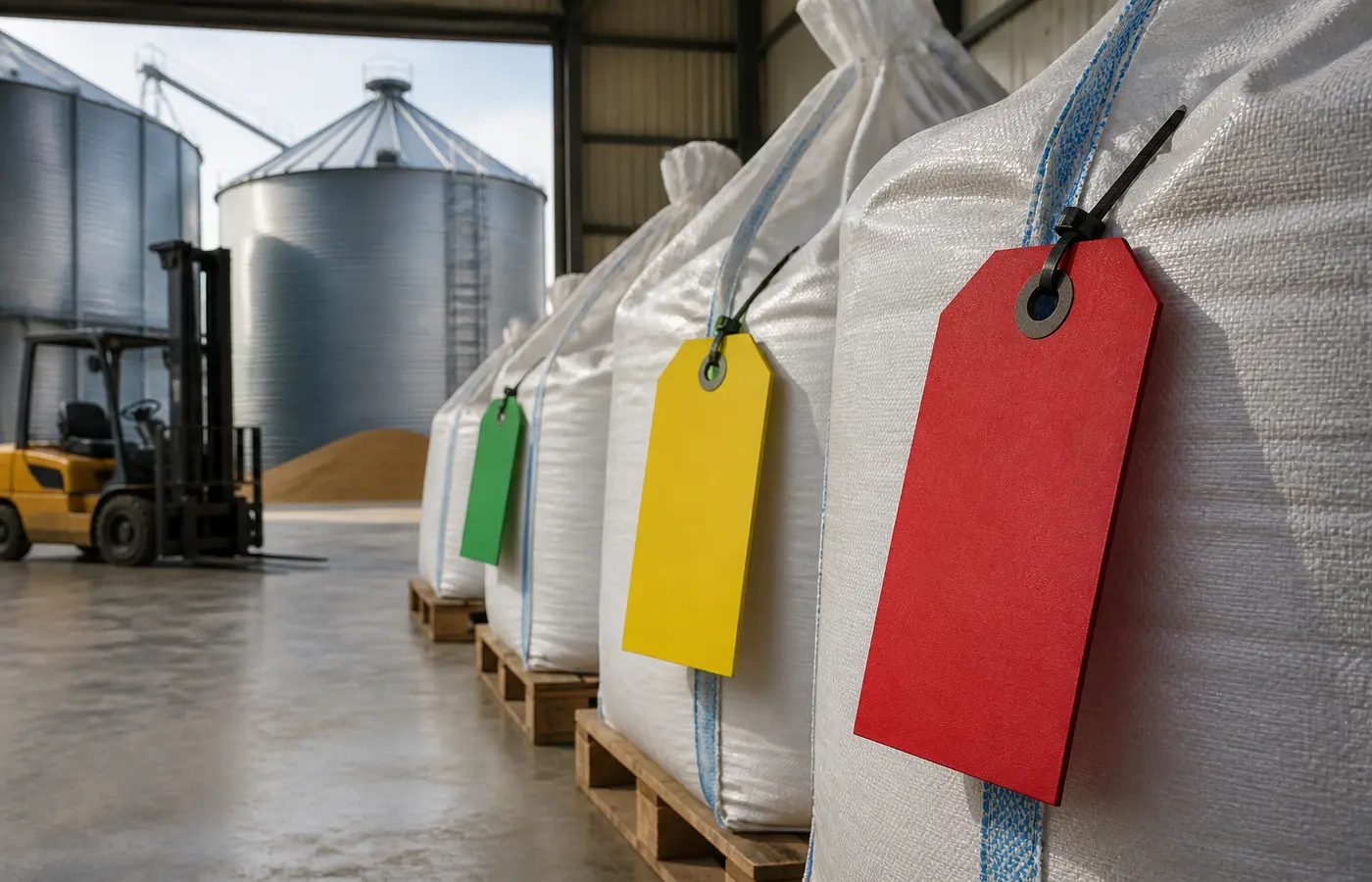
The record should also show how physical control and system control relate. A pallet may have a hold tag, for example, but the system status should not imply that it is available for allocation or dispatch. Conversely, a system hold is weak if the material can be mistaken for available stock on the floor.
A supplier warehouse expectation published by Kraft Heinz describes the general purpose clearly: material pending final disposition should be identified, isolated and protected against inadvertent dispatch. This is a customer-specific document, not a universal legal requirement or a China-specific instruction. It is nevertheless a useful test of whether a site’s own control process links a record to real containment.
Define the held lot and the scope of control
The held lot must be identifiable to someone who was not present when the concern arose. Product name alone is rarely enough. The record should allow the next shift, warehouse team and reviewer to find the material and understand whether other material may be affected.
Use fields that distinguish the affected item from the wider production or storage environment.
| Record field | What it should clarify | Why it matters |
|---|---|---|
| Hold ID | The unique record for this decision trail | Prevents mixed notes from separate events |
| Product and lot or batch ID | Exactly which material is controlled | Supports identification and traceability |
| Quantity and unit | How much material is affected | Makes reconciliation possible later |
| Location | Where material is physically or logically held | Supports containment and stock checks |
| Inventory status | Whether the system prevents normal use or dispatch | Connects the decision to transaction control |
| Related lots or locations | Whether the concern may extend beyond one lot | Keeps scope assumptions visible |
| Hold reason category | The broad issue that triggered review | Helps route the record without replacing the facts |
A Kivloo hold and release register template provides a non-authoritative example of practical fields such as hold ID, product or lot, quantity, location, reason, owner, disposition and verification. Its value is as a record-design prompt, not as a mandated form.
A hold record should distinguish confirmed scope from possible scope. If the team knows that only one identified lot is affected, say so. If linked locations or adjacent lots still need review, record them as open questions rather than silently expanding or narrowing the hold. This matters especially where material has moved between receiving, processing, storage or dispatch areas.
General traceability guidance cannot establish the legal record format, retention period or approval route for a particular Chinese site. Your team should align the form or digital workflow with applicable local requirements, customer commitments and the site’s approved procedures.
Record the trigger, immediate containment and open question
A strong hold record separates observation from interpretation. At the beginning of a review, the team may not know whether the concern will be confirmed, corrected by documentation, or require another disposition. The record should not claim certainty that does not yet exist.
Start with the observed trigger. This may be a discrepancy, a condition noticed during handling, an incomplete document, an identity question or another event defined in the site procedure. Record what was observed, when and where it was observed, who reported it and what immediate action was taken.
A practical workflow article from Food Machine similarly emphasises containment before final determination. This is useful operational context, rather than a substitute for a site’s food-safety procedure.
Use separate fields or clearly labelled notes for three different things:
- Observed facts — what the reporter saw, found or could not verify.
- Immediate containment — what was done to prevent further use, processing, transfer or dispatch while the matter is reviewed.
- Open decision question — what must be established before a disposition can be considered.
For example, an illustrative entry might state: “Receiving document does not match the lot identifier shown on the unit label.” The containment note could state that the relevant units were placed in the designated controlled area and the inventory status was changed to hold. The open question would be whether the material identity can be verified through the site’s approved records and review process.
This is more useful than writing “quality issue” with no explanation. It also avoids prematurely recording a conclusion such as “mislabelled” before the evidence supports it.
Trigger categories, escalation thresholds and required containment actions should come from the site’s own procedures. They should not be inferred from a generic article or copied from another company’s programme.
Assign review ownership and decision authority
Every open hold needs an owner. Ownership means responsibility for moving the review forward: collecting records, coordinating checks, identifying unresolved points and updating the hold record. It does not automatically mean authority to release the product.
The record should name or identify:
- the review owner;
- the function responsible for maintaining physical and inventory controls;
- the required reviewers, where applicable;
- the person or role authorised to approve final disposition; and
- the person responsible for verifying that the approved decision was implemented.
These may be different people. A warehouse lead may ensure that a pallet remains blocked and accounted for. A quality or technical function may assemble and assess supporting information. A designated decision-maker may approve release, continued hold or another site-approved disposition. The appropriate role titles are site-defined; titles such as QA manager, technical manager or warehouse supervisor are examples, not universal prescriptions.
The Kraft Heinz warehouse document calls for designated personnel with authority and responsibility to manage hold and release programmes and track held product through final disposition. The Kivloo template likewise prompts a site to define who can impose a hold and who can authorise disposition. Together, these sources support a simple operational principle: the record should make responsibilities visible rather than relying on assumptions during a shift change.
Where authority is delegated, record the role and the delegation basis under the site procedure. Avoid informal release through a chat message, verbal instruction or unexplained system status change. If such communication is necessary for immediate coordination, attach or summarise it in the controlled record and obtain the required formal authorisation afterward.
Attach the evidence behind release, rework or continued hold
A final status is not a decision rationale. “Released” should lead a future reviewer to the information considered, the remaining limitations and the person who approved the outcome.
The Canadian Food Inspection Agency guidance on documenting disposition describes collecting information to document disposition of non-compliant food. That guidance applies in a Canadian regulatory context; it does not determine requirements for Chinese operations. Its general record-control principle remains useful: disposition should be supported by a documented information base.
ACA’s practical recommendation is to include an evidence log within the hold record or link it to controlled documents. The log can use the following structure:
| Evidence item | What it addresses | Result or limitation | Reviewed by | Record link |
|---|---|---|---|---|
| Receiving or production record | Identity, time or process history question | State what the record does and does not establish | Named role or person | Controlled file or system reference |
| Inventory reconciliation | Quantity and location scope | Note any unresolved difference | Named role or person | Reconciliation record |
| Supplier, transport or internal documentation | Relevant documented history | Record missing or inconsistent information | Named role or person | Document reference |
| Other site-approved review evidence | The specific hold question | Explain relevance and limitations | Authorised reviewer | Supporting record |
The point is not to create paperwork for its own sake. It is to show the link between the open question and the information used to answer it.
Do not treat any single document, result or approval as automatically sufficient for release. The relevance and limits of evidence depend on the reason for the hold, product history, process conditions and the site’s approved process. If evidence is incomplete, contradictory or still under review, the record should say that plainly and retain the hold or use another approved route.
For each disposition, document the reasoning in plain language:
- Release: what evidence supported return to normal status, what scope was released and who approved it.
- Continued hold: what remains unresolved, who owns the next action and when the record will be reviewed again.
- Other site-approved disposition: the approved path, authority and linked records. Do not use the hold record alone as operational instruction for rework, destruction, relabelling or other specialised activity.
Close the hold without losing the audit trail
Closing a hold means verifying that the documented decision has been implemented in both the system and the physical operation. A signature or electronic approval is incomplete if the inventory remains wrongly available, the material remains in the wrong location, or affected functions were not informed.
Before closure, confirm and record:
- the final disposition and authorisation date;
- the lot quantity reconciled against the hold scope, including any documented differences;
- the inventory status updated to match the approved decision;
- physical identifiers, segregation controls or location status updated as applicable;
- communication to functions affected by the decision, such as warehouse, planning or dispatch; and
- the location of the retained hold record and supporting evidence.
A separate verification field is useful because approval and implementation are different checks. The person who authorises release may not be the person who confirms that inventory and physical controls now match that authorisation.
Do not add a retention period or declare an audit obligation unless it is established by the requirements that apply to your operation. The record should instead point to the site’s document-control procedure for retention, access and version management.
As a bounded next step, take one current hold form or system screen and compare it against this decision trail. Can a later reviewer identify the held lot, the containment action, the open question, the evidence reviewed, the authorised disposition and the verification of implementation? If not, improve the missing link before the next real hold requires it.
Frequently asked questions
What information should a food lot hold record include?
At minimum, include a unique hold ID, product and lot identification, quantity, location, inventory status, trigger, time and reporter, containment action, review owner, decision authority, evidence reviewed, final disposition and verification. The exact format should follow the site’s approved process and applicable requirements.
Who should be allowed to release a held food lot?
Release authority should be assigned by the site’s hold and release procedure. The authorised person or role should be distinct from informal operational convenience. Investigation ownership, warehouse custody and final disposition authority may sit with different functions.
Can a lot be released if the original reason for the hold is still unclear?
A hold record should not hide unresolved uncertainty. Whether release can be considered depends on the site’s approved procedure, the specific reason for the hold and the evidence available. If the basis for the decision is incomplete, record the limitation and use the site’s defined escalation or continued-hold process rather than treating the absence of evidence as evidence of acceptability.
How is a lot hold record different from a shift handover or rework traceability record?
A shift handover communicates work status between teams. A rework traceability record follows material movement and use. A food lot hold record preserves the decision trail for material taken out of normal use: why it was controlled, who reviewed it, what evidence informed the decision and how the final outcome was authorised and verified. The records may link to one another, but they serve different purposes.
Source and further reading
ACA’s practical examples and working checklists are independent editorial analysis. The linked source provides the underlying reference; it does not endorse this article.