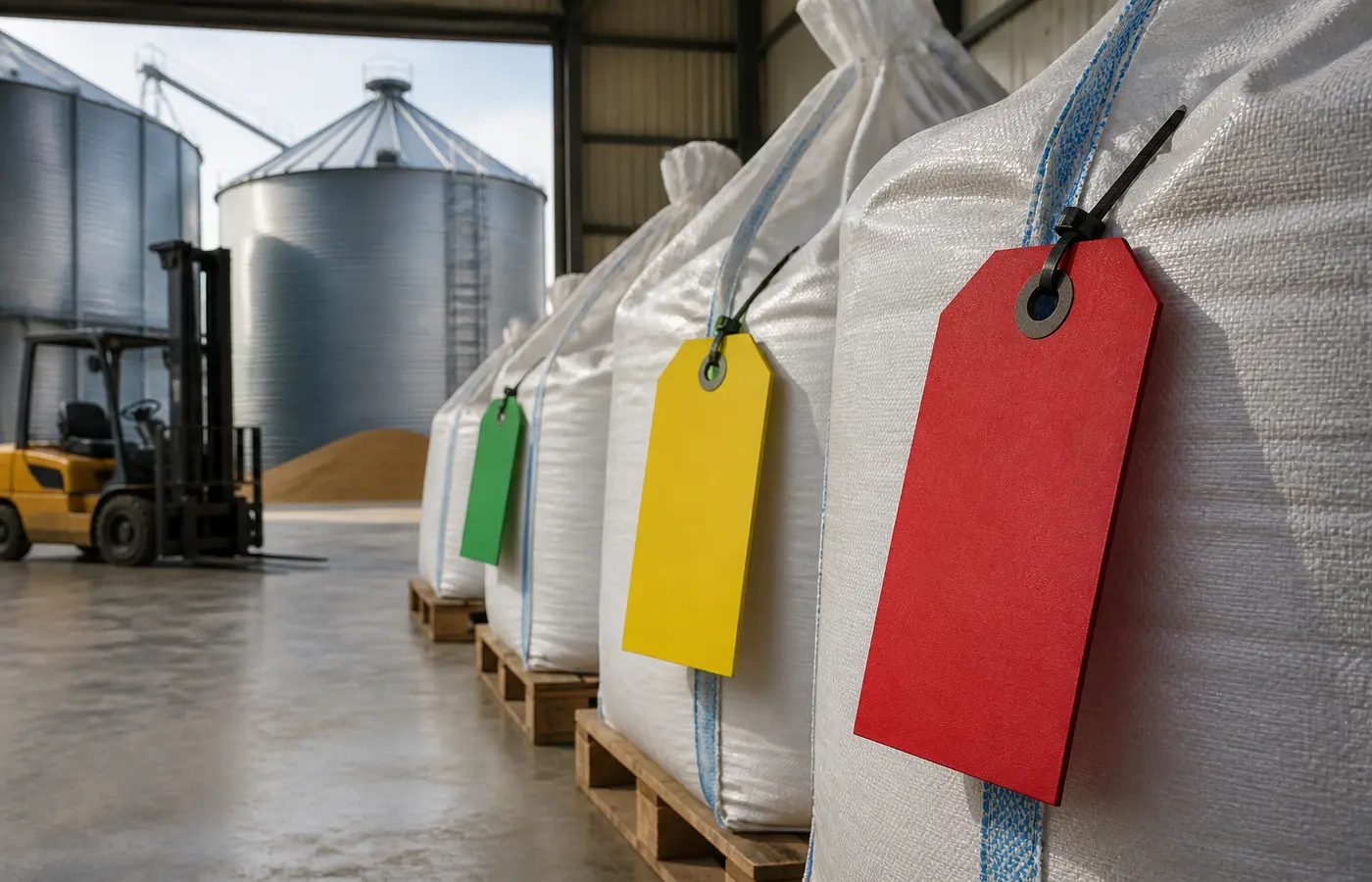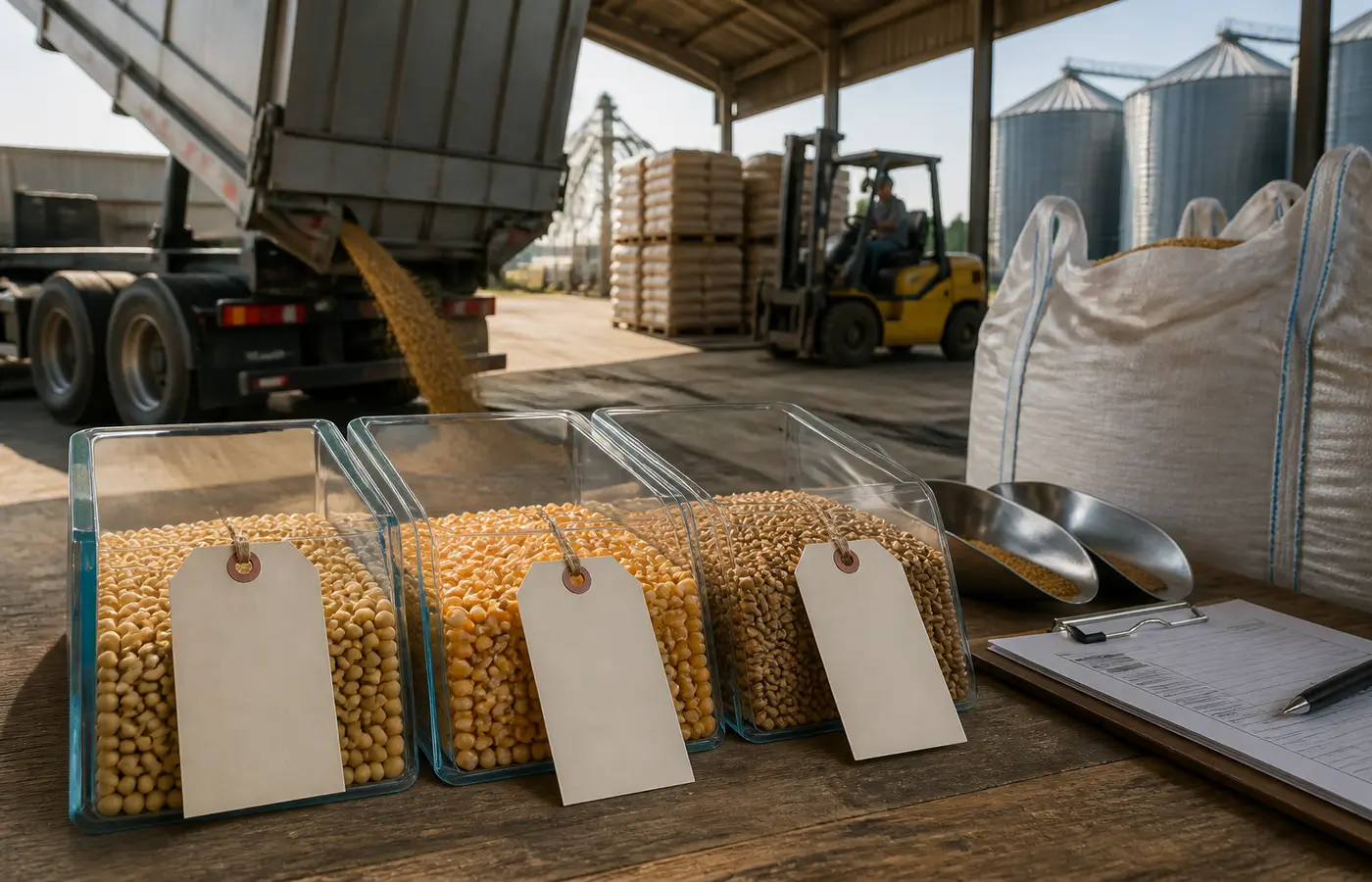
A purchase order records what your business expected to buy. A receipt record should show what actually arrived. When one supplier order is delivered in parts, that distinction determines whether your team can later trace an ingredient into a food batch without relying on assumptions.
The practical rule is straightforward: create a separate receipt record for each physical arrival, record the supplier lot code and quantity actually received on that arrival, and carry that receipt identity into production. If the lot link is missing or cannot be verified, preserve the facts you do know and mark the link as unresolved. Do not assign the material the identity of an earlier delivery simply because both deliveries relate to the same purchase order.
This is a record-control framework, not a statement of China-specific legal requirements. Your site’s approved food-safety plan, customer specifications and applicable local requirements should determine the release, hold and escalation actions that follow.
Start with the receipt, not the purchase order total
A single purchase-order line can result in one delivery, several partial deliveries or a combination of deliveries with different labelled lots. The purchase order may show the total quantity ordered and the quantity still outstanding, but it does not establish the lot identity of material that has not yet arrived.
For traceability purposes, separate three records that are often treated as though they are the same:
| Record | What it answers | What it should not establish alone |
|---|---|---|
| Purchase-order line | What was ordered from a supplier | Which lot code arrived in a specific delivery |
| Receipt event | What physically arrived, when, in what quantity and with what label information | Whether later deliveries share the same lot identity |
| Internal inventory lot | What controlled stock is available for use at your site | The supplier lot code unless the receipt record preserves that link |
This distinction is useful even when your system displays all three records on one screen. A receiving workflow in Formul Docs illustrates the underlying discipline: compare the purchase order with the delivery, enter the quantity received, leave lines at zero if nothing arrived, and record supplier lot numbers for lot-tracked items. Similarly, BatchDash’s receiving guidance describes a partial receipt as leaving the balance open for a later receipt.
Those are software workflow examples, not universal compliance rules. The operational lesson is broader: an outstanding balance is an ordering fact, not evidence that the outstanding quantity belongs to the same supplier lot as material already received.
Create one receipt record for each arrival
Each arrival needs a receipt reference that can be found later by receiving, warehouse, quality and production teams. A delivery note may cover several materials; one vehicle may also contain several supplier lots of the same material. In either case, record each materially distinct lot as a separate receipt line.
A minimum receipt record can include the following fields:
| Field | Why it matters at handover |
|---|---|
| Receipt reference | Identifies the physical receiving event and connects documents, checks and follow-up actions |
| Receiving date and time, where useful | Distinguishes separate arrivals and supports sequence reconstruction |
| Supplier name | Identifies the source named on the order and delivery paperwork |
| Purchase-order and line reference | Connects the receipt to the commercial order without replacing the receipt identity |
| Material description | Confirms what was received and helps avoid mixing similar items |
| Quantity received and unit | Shows the actual quantity placed into inventory or held for review |
| Supplier lot code | Preserves the supplier’s identifier exactly as labelled |
| Internal receipt or inventory-lot ID | Gives your team a stable internal identifier for storage and production issue |
| Storage location | Helps locate stock and supports stock checks |
| Acceptance, hold or other status | Makes the current usability decision visible to the next team |
The instruction to capture the supplier lot code exactly as shown on the label is particularly important. Kitchen to Plant’s receiving-log guidance treats the supplier code as the information that later connects a finished lot back to ingredients, alongside supplier identity, checks and acceptance decisions.
Exact capture does not mean copying an unclear code without question. If a label is damaged, the code is illegible or the delivery paperwork conflicts with the container label, record the observed condition. Avoid silently “correcting” a code based on what appears likely. A later reviewer needs to see what was verified and what remains to be reconciled.
Systems may create an internal lot automatically at receiving. Novex ERP’s example of lot-coded receiving describes storing supplier lot code, internal identity, quantity, unit, date, location, purchase-order reference and supplier information together. Whether your team uses an ERP, spreadsheet or paper log, the control objective is the same: preserve the relationship rather than relying on memory or an inbox attachment.
Keep quantity balances at lot level after a split delivery
After receiving, the record must remain usable. A quantity total for a material is helpful for planning, but it cannot show which supplier lot was used if separately received lots have been pooled only in the records.
For each internal receipt lot, maintain a basic movement balance:
- quantity received;
- quantity released or issued to production;
- approved adjustments, returns or disposals where applicable;
- remaining quantity; and
- the reference for each movement.
The purpose is not to create unnecessary administration. It is to allow a reviewer to ask a bounded question: “How much of this receipt lot was still available, and which production records used it?”
Do not combine the balances of two receipt lots solely because they share a purchase-order line, material description or supplier. They may genuinely carry the same supplier lot code, but that should be demonstrated by the verified identifiers on the receipt records. Conversely, two deliveries may look similar but carry different codes, dates or acceptance status.
A simple internal lot ID can provide a stable control point where the supplier’s code is reused, formatted inconsistently or difficult to read. The internal ID should not replace the supplier lot code; it should link back to it. Craftplan’s traceability documentation describes traceability records that connect supplier receipts and ingredient lots with completed production batches. That connection is what makes a lot balance valuable beyond inventory counting.
Link receipts to production batches without losing the original lot identity
When production uses materials from several receipts, the traceability relationship becomes many-to-one: multiple input lots can contribute to one finished batch. A single supplier-lot field on the finished-batch record is therefore often inadequate.
For each production batch, retain a record that identifies:
- finished-batch ID;
- production date, shift or other approved production reference;
- material used;
- internal receipt or inventory-lot ID issued or consumed;
- corresponding supplier lot code;
- quantity issued or consumed, where your procedure requires it; and
- any reconciliation, correction or exception reference.
The production record should preserve every verified input link. It should not replace several supplier identifiers with one “main” lot code for convenience. A trace-back exercise may need to start with a finished batch and identify all contributing ingredient lots; a trace-forward exercise may start with one supplier lot and identify the finished batches that used it. Craftplan describes both directions in its traceability workflow, including links among ingredient lots, production batches and purchase orders.
The Institute of Food Technologists guidance on food traceability discusses critical tracking events and key data elements as a general processed-food traceability framework. It is not China-specific law, and it should not be used as a substitute for local requirements. It does, however, support a practical design principle: retain the data elements at the event where the material changes custody, status or form, rather than trying to reconstruct them after production.
Use an unresolved-link status instead of guessing
Missing labels, late paperwork, commingled material, damaged containers and delayed data entry can all produce an incomplete lot link. The record should distinguish an unknown link from a guessed link.
A useful unresolved-link entry records:
- the receipt reference and known physical facts;
- the material, quantity, supplier and delivery reference where known;
- the missing, conflicting or unverified identifier;
- the current status of the material or record;
- the responsible role for reconciliation; and
- a target date or handover point for follow-up.
Whether the physical material is held, conditionally controlled or otherwise managed must follow the site’s approved procedure. Kitchen to Plant’s template distinguishes acceptance decisions and describes a QA hold and disposition-log approach for failed checks. That is a useful operational model, but it does not establish a universal mandatory hold or release process.
Consider this hypothetical example. A supplier order for an ingredient is delivered in two partial receipts. The first receipt has a verified supplier lot code on both the container label and delivery document. The second receipt has the expected quantity but no readable lot code on the outer containers, and its paperwork is incomplete.
The appropriate record is not to apply the first receipt’s lot code to the second receipt. Instead, create a second receipt record with its actual quantity, date, supplier and purchase-order reference; record the missing identifier; assign an unresolved status; and route reconciliation to the responsible role under the site procedure. If the supplier later provides verifiable information, update the record through an auditable correction or reconciliation reference rather than overwriting the original observation without explanation.
Run a short handover check before production uses the material
A brief check before issuing material to production can prevent traceability gaps from moving downstream. This is not a replacement for receiving checks, quality controls or legal obligations. It is a focused handover aid for confirming that the record and the material still agree.
Before use, the receiving, warehouse or production handover should confirm:
- the recorded receipt quantity agrees with the physical container count or measured amount, subject to the site’s normal tolerance and measurement process;
- the supplier lot code has been checked against the label and available documents;
- the internal receipt ID is present on the production issue or batch record;
- the lot-level remaining balance is sufficient for the quantity being issued; and
- unresolved identifiers, exceptions or reconciliation tasks have an assigned owner and visible status.
If the check identifies a mismatch, do not solve it by changing the lot identity to make the record appear complete. Preserve the discrepancy, escalate it under the approved procedure and document the eventual disposition.
The next practical step is to review one recent split delivery with the people who receive, store and issue material. Can they move from the purchase order to each physical receipt, then from each receipt to a production batch, without relying on a verbal explanation? If not, add the missing receipt-level fields and define who owns unresolved links before the next delivery arrives.
Frequently asked questions
Should a partial delivery use the same internal lot number as the first delivery against the purchase order?
Not automatically. Use the same internal lot only where your approved system and verified records establish that the receipts are the same controlled lot. A shared purchase order does not establish that result. If the deliveries have separately verified supplier lot codes or separate receipt events, retain separate receipt identities unless your documented procedure supports a controlled consolidation.
What should we record if the delivery quantity is correct but the supplier lot code is missing?
Record the quantity actually received, supplier, receipt date, purchase-order reference, material identity and the fact that the supplier lot code is missing or unverified. Mark the lot link as unresolved and assign follow-up according to your site procedure. Do not infer the code from an earlier delivery or from the outstanding purchase-order balance.
Can one food production batch be linked to several supplier receipt lots?
Yes. If production uses material from multiple verified receipt lots, preserve each input relationship in the batch record. The finished batch should show all relevant internal receipt IDs and supplier lot codes rather than one simplified supplier-lot field.
How should we handle material that was received before its lot details were entered?
Enter the known receipt facts as soon as they are available and identify the late or missing lot data as an exception. Reconcile the identifier using verifiable labels, documents or supplier confirmation under the site’s approved process. Keep a reference to the reconciliation so a later reviewer can distinguish original receipt observations from information added afterward.
Source and further reading
ACA’s practical examples and working checklists are independent editorial analysis. The linked source provides the underlying reference; it does not endorse this article.