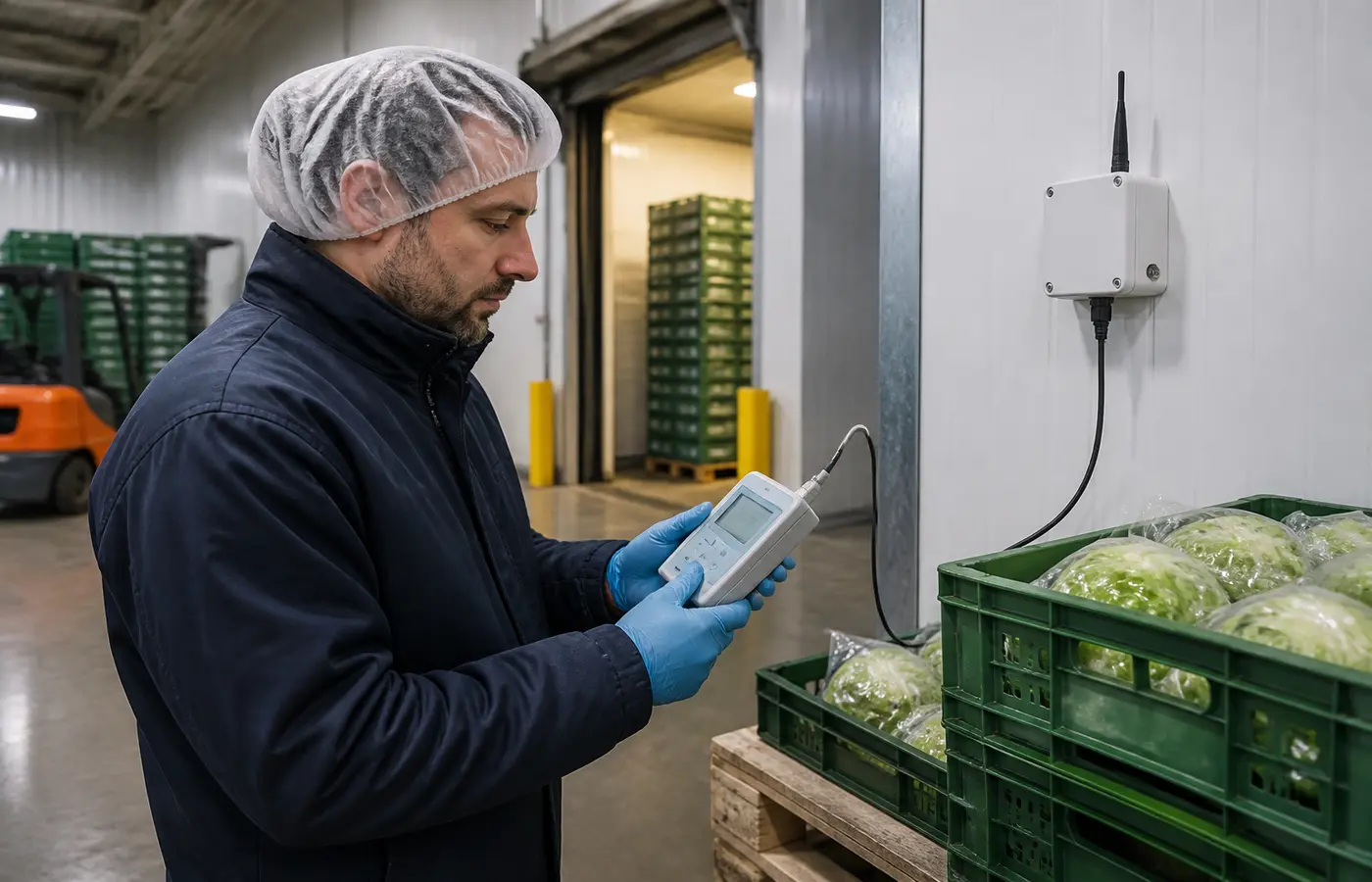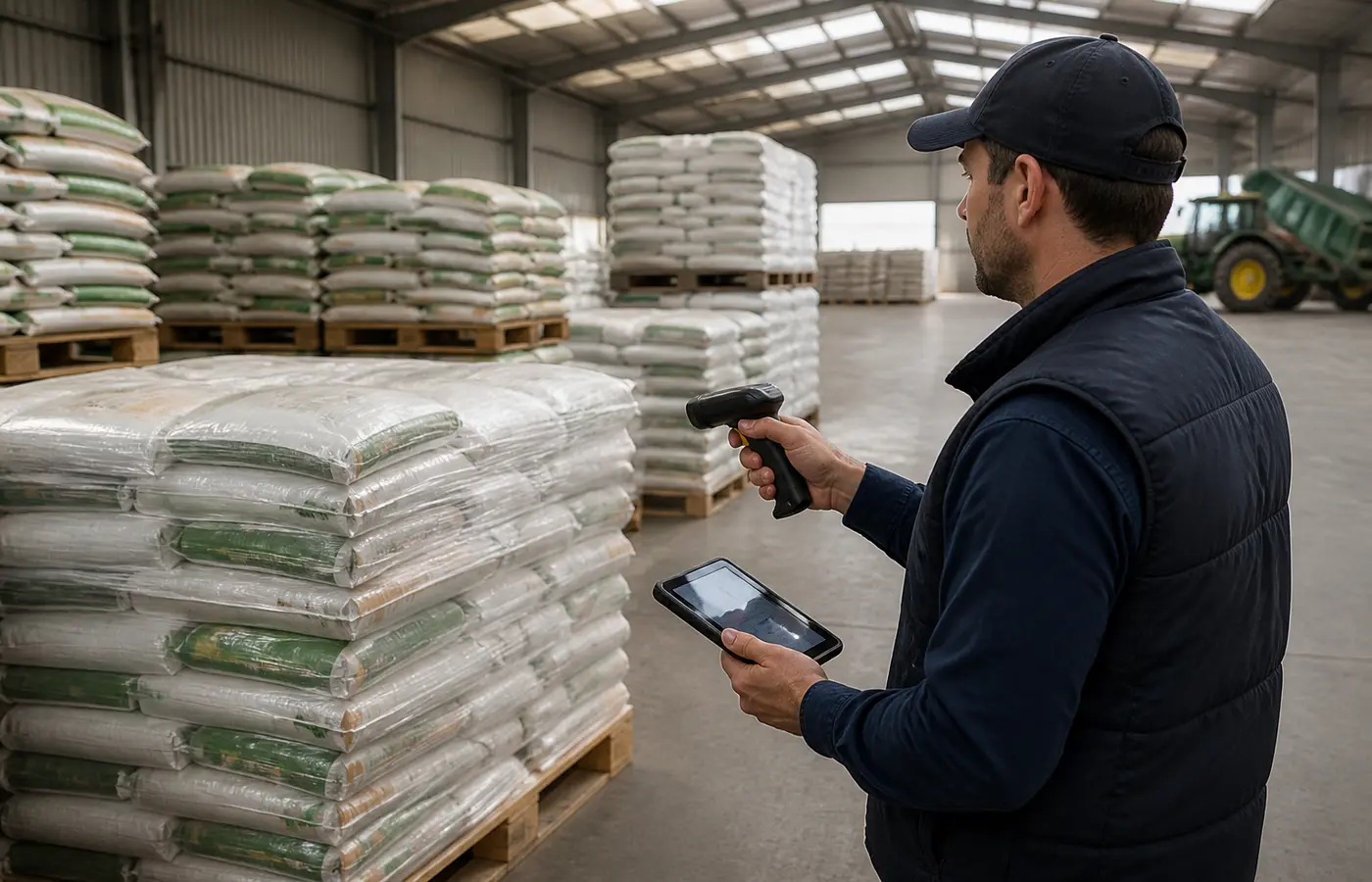
A warehouse team should be able to answer four questions about any lot without reconstructing the story from memory: where was it, how much was there, what changed, and who completed or accepted the move?
That requires a movement history, not only a current stock balance. A balance can show that 40 cases are now assigned to Location B-14. It may not show whether they arrived there from receiving, were transferred from quarantine, split from a larger pallet, returned from picking, or placed there following a count correction.
For practical control, treat each change in a lot’s physical position, handling arrangement or usable status as a recordable event. This article focuses on warehouse location history. It does not replace supplier-to-batch traceability, product-condition checks or cold-chain custody records.
Define the movement record before stock starts moving
A movement record is an event log. It should allow the team to follow a lot through receiving, storage, staging, picking, returns, inspection and dispatch preparation, including temporary areas that are easily overlooked.
General warehouse guidance commonly recommends recording receipts, moves, picks, returns and adjustments as they occur. For example, Kardex’s warehouse inventory guidance describes location control across staging, overflow, returns and quarantine, alongside transaction recording and cycle counting. This is useful operational context, but it does not establish China-specific legal, food-safety or traceability requirements.
ACA’s practical recommendation is to define the record structure before staff begin using it. The same fields should be available whether the record is kept in a warehouse management system, ERP system, spreadsheet or controlled paper form. A digital system may make recording faster, but unclear event definitions will still create incomplete history.
The starting question is simple: what must a supervisor be able to reconstruct later? In most warehouses, the answer includes the lot identity, quantity, origin location, destination location, time, status and handover responsibility.
Use one movement line for each physical or status change
One movement line should represent one identifiable movement or status event. Do not rely on a single overwritten location field when stock travels through several areas during a shift.
A working movement-log template can include the following fields:
| Field | What it records | Why it matters |
|---|---|---|
| Transaction or movement reference | Unique record number | Lets the team identify the specific event during review. |
| Lot reference | The lot, batch or internal stock identifier | Connects movements to the correct stock identity. |
| Handling-unit reference | Pallet, tote, carton or other unit, where used | Helps distinguish separate physical portions of the same lot. |
| Movement type | Put-away, transfer, replenishment, return, quarantine, adjustment or other defined event | Explains why the change occurred. |
| Quantity and unit of measure | Amount moved, such as cases, kilograms or pallets | Supports reconciliation without mixing units. |
| From-location | Physical or system location before the event | Establishes the departure point. |
| To-location | Physical or system location after the event | Establishes the destination point. |
| Status before and after | Available, held, inspected, damaged, allocated or other local status | Separates a location move from a release or hold decision. |
| Time recorded | Event time or confirmed completion time | Places the move in a reviewable sequence. |
| Responsible person or handover point | Person, role, device ID or controlled handover reference | Makes responsibility visible without relying on memory. |
| Exception note | Damage, mismatch, incomplete transfer or other issue | Keeps an abnormal event from disappearing into routine stock data. |
The fields should fit the warehouse’s existing quality procedures, system capabilities and naming conventions. A small facility may use controlled location labels and a daily movement sheet. A larger operation may capture transactions through scans. Barcode or RFID tools can reduce manual entry opportunities, but they do not guarantee accurate inventory if labels, quantities, locations or confirmations are wrong.
A movement to a temporary staging lane deserves the same discipline as a move to long-term storage. Temporary locations often become blind spots because staff assume the stock will move again soon. If a lot can remain there long enough to be misplaced, picked, inspected or handed to another team, it should appear in location history.
Record splits without losing the parent lot
A split occurs when part of a lot or handling unit is moved separately from the remainder. The warehouse should retain the original lot relationship even where the physical stock is divided across several pallets, locations or statuses.
Consider a hypothetical lot of 100 cases received under lot reference L-204. The team moves 60 cases to reserve storage and 40 cases to a picking area. The lot identity remains L-204, but the warehouse now needs to distinguish two physical portions.
A workable approach is to retain the parent lot reference and create handling-unit or sub-lot references where necessary:
- Parent lot: L-204, original quantity 100 cases.
- Child handling unit: L-204-A, 60 cases, reserve location.
- Child handling unit: L-204-B, 40 cases, picking location.
The records should make the relationship visible and reconcile to the quantity available before the split. If 100 cases were available and 60 plus 40 were transferred, the parent-level balance should not silently become 200 cases because both child records were added without reducing the original available quantity.
A split can also involve status, not only location. For example, part of a received lot may be available for storage while another part is held for inspection. The movement record should state both the quantity and the status outcome. Otherwise, a later reviewer may know where the stock went but not whether it was eligible for use.
The identifier format is a local design choice. Some teams may use pallet IDs; others may use sub-lot references or system-generated license plate numbers. The important control is not the format itself, but the durable parent-child link and the ability to reconcile each child quantity to its source.
Treat merges as a new handling decision, not a simple location update
A merge is more complex than moving two pallets into the same bay. It occurs when separately tracked stock is physically consolidated into one handling unit, or where the warehouse begins treating multiple portions as one pickable unit.
For example, two partly used pallets may be placed onto one new pallet to save space. If the pallets came from different lots, the resulting handling unit should retain both contributing lot references. A single location update cannot show that relationship.
A useful merge record identifies:
- Each source lot or handling unit.
- The quantity taken from each source.
- The resulting handling-unit reference.
- The destination location and resulting status.
- The person or controlled handover that completed the consolidation.
Suppose handling unit H-11 contains 12 cases of lot L-204 and handling unit H-18 contains eight cases of lot L-207. If they are physically consolidated, the resulting pallet should not be represented only as “20 cases in A-05.” The record should preserve that 12 cases originated from L-204 and eight from L-207.
This is not an instruction that lots may always be combined. Whether physical commingling is acceptable depends on the product, customer specifications, quality controls and applicable local requirements. In some operations, separate lots may be stored together in one area but must remain physically identifiable. In others, a consolidation may require a specific approval or may not be permitted at all.
Also distinguish a physical merge from an administrative correction. If a system shows two handling units but staff discover that one was entered twice, correcting the record is an adjustment or data-error investigation, not evidence of a physical consolidation. Calling every balance change a merge weakens the audit trail.
Make relocations and handovers visible in location history
A relocation should show both sides of the event: where stock left and where it was confirmed. This is particularly important when different teams control receiving, quality inspection, replenishment, picking and returns.
A basic relocation sequence may be:
- Stock is released from the source location.
- It is transferred physically to a destination or temporary area.
- The destination is confirmed by the receiving person, team or system transaction.
- Any mismatch is recorded as an exception rather than hidden by overwriting the intended destination.
Dual confirmation, scanning at departure and receipt, or supervisor review can be useful operational controls. Their suitability depends on the warehouse layout, staffing, transaction volume and risk points. They should be adopted as deliberate controls, not treated as universal requirements.
Location history should include areas such as receiving, inspection, quarantine, overflow, picking, returns and dispatch staging. These are not merely process labels. They are locations or custody points that may determine which team was responsible for the stock at a given time.
Specialist warehouse guidance also stresses clear procedures for transfers, counting, returns and exception handling. Choice Logistics notes the value of defining system transactions, scan points, quality checks and escalation routes in warehouse processes. A local procedure can use that principle without assuming that one technology or approval pattern suits every site.
Reconcile movement history with stock checks and exception records
A movement log is useful only if the team compares it with physical reality. When a cycle count or stock check finds a mismatch, avoid correcting the current balance by simply overwriting the prior record. Preserve the history and add a separate adjustment or exception record.
A bounded review process is:
- Confirm the physical quantity, lot reference, handling unit, status and location observed.
- Compare the observation with the latest recorded movement.
- Work backward to the earliest unexplained event rather than starting with the final discrepancy.
- Record the investigation result, including what remains unconfirmed.
- Enter any approved adjustment as its own transaction with a reason and responsible reviewer.
The review frequency, approval levels and record-retention periods should be set by the organisation’s procedures and any applicable requirements. They should not be copied from generic warehouse articles without checking local obligations and customer commitments.
A practical exception checklist can cover:
- A movement was completed physically but no transaction was recorded.
- The scanned quantity differs from the quantity physically transferred.
- The lot is at an unknown, unlabelled or unapproved location.
- Stock arrived at a destination but receipt was not confirmed.
- A handling-unit label does not match the lot or quantity in the system.
- A status changed without a supporting inspection, release or hold record.
- A proposed merge lacks clear source-lot relationships.
The movement log can support investigation, but it does not itself prove product condition, supplier origin, expiry suitability or cold-chain compliance. Those questions need their own records and controls.
Keep three records separate, then link them deliberately
Warehouse teams often use the word “traceability” for several different records. Keeping their purposes separate makes each record more useful.
| Record type | Core question it answers | Useful linking reference |
|---|---|---|
| Supplier-to-batch linkage | Which supplier receipt, production batch or source document relates to this lot? | Supplier lot, internal batch or receipt reference |
| Warehouse lot-movement history | Where was this lot or handling unit, in what quantity and status, and who handled the move? | Lot and handling-unit reference |
| Cold-chain or custody-transfer record | What happened during controlled transfer or custody change, where applicable? | Lot, shipment, seal, device or handover reference |
A shared lot or handling-unit reference can connect these records. It should not collapse them into one vague log. A supplier record may establish origin linkage, while a warehouse movement record establishes internal location history. A temperature or custody record may document a different control question entirely.
As a next step, map one real movement path in your warehouse: receiving to inspection, storage, picking, staging and return if applicable. For each handover, ask whether the team could reconstruct the lot, quantity, location, status, time and accepting party from the records alone. Any step that depends on memory is a candidate for a clearer movement event or exception control.
Source and further reading
ACA’s practical examples and working checklists are independent editorial analysis. The linked source provides the underlying reference; it does not endorse this article.