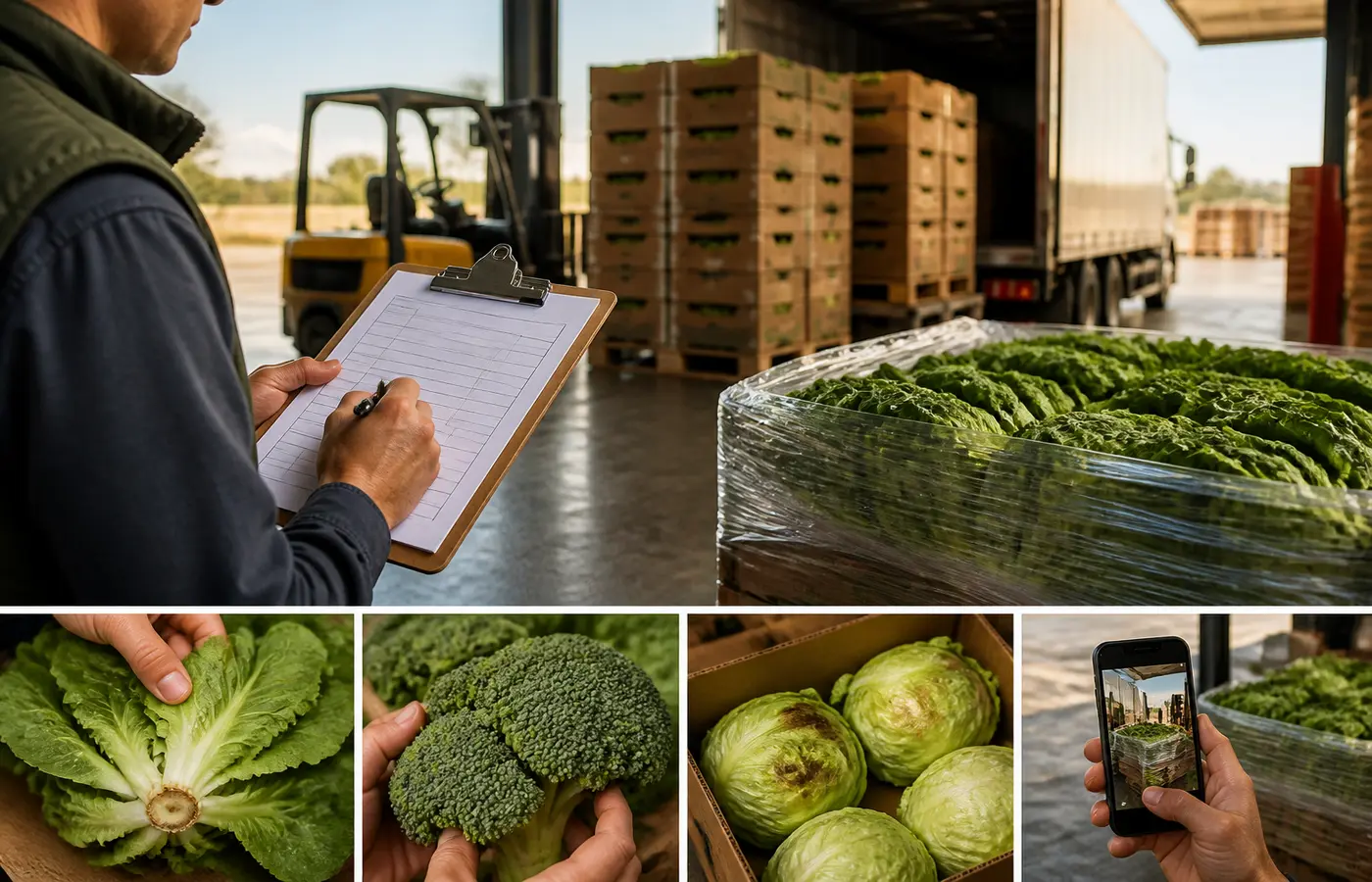
A cold-chain receiving record should allow a later reviewer to reconstruct the handover without relying on memory. It should show what arrived, which batches were involved, when custody changed, what the team checked, what each temperature reading represented, and what happened if there was an issue.
That is more useful than a form containing only a delivery number, a signature and one temperature figure. A bare figure may not show whether the team measured product, packaging, vehicle air or a point near an open door. Likewise, a signature alone may show that documents changed hands, but not whether a receiver accepted the product, placed it on hold, or escalated an exception.
China’s GB/T 40956-2021 is listed as a specification for food cold-chain handover operations, covering matters including inbound handover, inspection, temperature recording, records and abnormal conditions. The available standards listing and summary provides useful context, but a site should consult an authorised copy of the applicable standard and its own approved procedures before treating any detailed requirement as mandatory.
The framework below is All China Agriculture’s practical documentation approach. It is not a substitute for your approved quality, HACCP, purchasing, recall, contract or escalation procedures.
Start with a record that can reconstruct the handover
The receiving record is a handover document, not simply a temperature log. Its purpose is to preserve the chain of information at the point where responsibility may move from one party to another.
A usable record answers six questions:
- What arrived? Product description, quantity, shipment reference and batch or lot identity.
- When did it arrive and when was receiving completed? Record the relevant times rather than relying on a later entry.
- What was checked? Temperature-reading context, visible product condition and document checks.
- Who participated? The receiving representative and the delivery or carrier representative, identified by name or role according to site practice.
- What decision was made? Accepted, accepted with a documented condition, placed on hold, rejected, or escalated for review.
- Where is the evidence? Links to delivery paperwork, photographs where the procedure allows them, temperature-device records and any non-conformance report.
This structure matters because the same temperature or condition observation can lead to different actions under different product specifications, contracts and local procedures. The record should show the observation and the decision separately rather than implying that one automatically proves the other.
For example, a record stating “4.5°C, accepted” is difficult to interpret later. A more reconstructable entry would identify the time, the measured point, the device or method where available, the person taking the reading, the applicable specification reference, and the acceptance decision-maker. It need not make the form complicated; it needs to preserve the context that gives the entry meaning.
Identify the load, batches and people involved
Complete the identity fields before unloading is finished where practical. Waiting until the product has been moved, mixed with stock or separated from its labels makes later reconstruction more difficult.
At a minimum, connect the receiving record to:
- supplier, sender or dispatching site;
- carrier or delivery company, where relevant;
- vehicle, container or route reference used by the site;
- purchase order, delivery note, shipment or booking reference;
- product description and packaging form;
- quantity received, short-delivered or refused;
- batch, lot, production or traceability identifiers shown on the product or documents;
- arrival time and receiving-completion time; and
- receiving and delivery representatives, using names, roles or identification methods defined in the local procedure.
A mixed load requires more discipline than a single-batch delivery. Do not rely on one header-level lot entry if several lots, suppliers, storage conditions or products are present. Either give each batch its own line or attach a batch schedule that clearly maps each batch to the relevant quantity and outcome. The important point is that a reviewer can determine which condition observation and decision applied to which goods.
This lot-level connection is also a useful traceability principle. The United States-focused Produce Traceability Initiative guidance on FSMA 204 discusses maintaining links between traceability lot information and supply-chain events. It is not a statement of Chinese legal requirements. It does, however, illustrate the operational value of preserving identifiers as products move between parties.
Where labels are missing, inconsistent or unreadable, record that fact as an exception rather than creating a replacement identifier from memory. If your procedure permits a temporary internal reference, link it explicitly to the affected documents and describe why the original identifier could not be confirmed.
Record temperature readings with their measurement context
A temperature entry is evidence only of what was measured, at a particular place and time, using a particular approach. It should not be presented as a complete description of the shipment unless the receiving procedure establishes that it is representative.
For each reading, record:
| Record item | What to capture | Why it matters |
|---|---|---|
| Reading | Value and unit | Avoids ambiguity between units or transcription formats. |
| Time | Time the reading was taken | Distinguishes arrival from later receiving activity. |
| Measurement point | Product, package surface, packaging space, vehicle air, container area or other defined point | Explains what the number actually represents. |
| Batch or item link | Product line, pallet, lot or location checked | Keeps the observation connected to the correct goods. |
| Method or device | Device identifier, probe type or approved method where available | Supports later review of how the reading was obtained. |
| Person | Name, initials or role of the person taking the reading | Establishes responsibility for the entry. |
Vehicle air temperature is not automatically the same as product temperature. It may be a relevant operational observation, but it describes air at the measured point rather than necessarily the internal condition of each product unit. Similarly, a package-surface reading and a reading taken between cartons may serve different purposes. The form should name the measurement point instead of treating all readings as interchangeable.
General overseas guidance can support this distinction without setting local requirements. For example, Manitoba’s shipping, receiving, handling and storage guidance discusses the importance of refrigeration equipment and temperature-measuring devices being maintained and in working order. It does not establish Chinese standards, nor does it determine the correct receiving method for a specific product or facility.
Do not put a generic temperature threshold on a form simply because it is familiar. The applicable limit, measurement method and decision rule may depend on the product, specification, customer agreement, transport condition and approved local procedure. If a relevant criterion exists, reference the controlled specification or procedure version rather than copying an uncontrolled figure into a free-text note.
Separate observed product condition from acceptance decisions
Receiving teams often need to record visible issues quickly. The best record describes what was observed without diagnosing a cause that the receiver cannot establish at the dock.
Useful observation fields may include:
- damaged, crushed, wet, open or compromised packaging;
- leakage or visible contamination concern;
- label mismatch, missing label or unreadable traceability information;
- signs of thawing or product condition inconsistent with the stated delivery condition;
- unusual odour or visible foreign material; and
- vehicle or container cleanliness concerns observed during receiving.
Use factual language. “Two outer cartons on pallet 3 were wet at the lower corner” is more useful than “carrier caused water damage.” The first describes an observation that can be checked against photographs, product location and delivery documents. The second assigns fault before the cause has been assessed.
The next field should state the decision separately: accepted, conditionally accepted under a defined process, held pending review, rejected, returned, segregated or otherwise handled according to site procedure. Record who made or authorised that decision and, where relevant, the reference to the controlling specification or escalation record.
The Wisconsin receiving-deliveries SOP is a United States operational example that recommends establishing a rejection process and noting rejected items on delivery paperwork. It should not be treated as a Chinese operating requirement. Its practical lesson is narrower: if goods are refused or disputed, the delivery-facing document and the internal record should point to the same event.
A visible condition issue or a temperature observation does not, by itself, prove product safety status, root cause or carrier liability. The receiving record should preserve the facts needed for the appropriate team to assess those questions under the site’s procedures.
Document exceptions before the evidence is lost
Exception records are most valuable when they are created at the time of receiving. Once goods are moved, labels removed, pallets broken down or delivery staff have left, evidence can become harder to connect.
When an issue is identified, use a simple sequence:
- Describe the issue clearly. State the relevant product, batch, quantity, observation, time and location.
- Preserve the identity link. Retain or photograph labels and delivery paperwork where your procedure permits. Do not separate affected goods from their identifying information without creating a controlled link.
- Record notifications. Note who was informed, their role and the time of notification. This may include the receiving supervisor, quality function, supplier contact or carrier representative, depending on the escalation procedure.
- State the temporary status. Record whether goods were held, segregated, returned, moved to a controlled area or otherwise handled.
- Link follow-up documents. Add the non-conformance, claim, investigation, corrective-action or return reference when one is created.
- Capture final disposition when known. If it is determined later, link the final outcome rather than overwriting the original observation.
Do not retrospectively fill gaps with assumptions. If no product reading was taken, record that it was not taken and, if known, why. If the driver left before acknowledgement could be obtained, record that fact. A complete record is not one that looks perfect; it is one that accurately preserves what the team knew and did at the time.
Time-stamped, linked records also improve internal handovers. A quality reviewer should not have to infer whether a held pallet was the same pallet mentioned in a delivery note, a temperature worksheet and an email thread. One exception reference across those records creates a workable path for review.
Use a receiving handover checklist that fits the site procedure
A compact checklist makes consistent completion easier during a busy delivery period. It should be designed around your actual product specifications, contracts and approved local procedures, not around generic internet thresholds.
| Record item | What to capture | Who confirms it |
|---|---|---|
| Shipment identity | Supplier, carrier, delivery and purchase references, vehicle or container reference where used | Receiver |
| Product and batch identity | Product description, quantity, lot or batch identifiers, mixed-load schedule if applicable | Receiver with delivery representative as appropriate |
| Timing | Arrival, check start and receiving-completion times | Receiver |
| Temperature-reading context | Value, unit, time, measurement point, item or batch link, method or device reference and recorder | Person taking the reading |
| Condition check | Factual packaging, label, cleanliness or visible-condition observations | Receiver |
| Decision | Acceptance, hold, rejection, escalation or other status under the site procedure | Authorised decision-maker |
| Exception reference | Non-conformance, photograph, document or communication reference | Receiver or quality representative |
| Handover acknowledgement | Names, roles and acknowledgement method used by the site | Receiving and delivery parties where applicable |
| Final status | Follow-up disposition or reference to the record that holds it | Responsible quality or operations role |
Not every delivery needs every exception field, but every form should make exceptions visible when they occur. Avoid forcing staff to write “N/A” repeatedly if a controlled checkbox or conditional section would be clearer. Conversely, do not remove the ability to describe unusual events merely because a form is designed for speed.
Before implementing or revising the form, compare it against the site’s product specifications, contracts, traceability process, records-control rules and escalation routes. Check whether the wording matches how roles actually work at the receiving dock. A form that asks a warehouse receiver to make an unauthorised quality decision will not create a reliable control, even if it is completed neatly.
Frequently asked questions
What should a cold-chain receiving handover record include?
It should link shipment and batch identity with relevant times, temperature-reading context, observed condition, responsible people, the receiving decision and any exception reference. The exact fields should align with the site’s approved procedures and product requirements.
How should a receiving team document a temperature exception?
Record the reading with its measurement context, identify the affected product and batch, state the temporary handling status, document who was notified and link any follow-up record. Avoid deciding the root cause or safety status in the observation field unless an authorised process has completed that assessment.
Is a vehicle air-temperature reading the same as a product-temperature reading?
No. A vehicle air reading describes air at the measured location and time. A product reading describes the product or a defined product-adjacent point. Both may be useful, but the record should state which was measured rather than treating them as equivalent.
Who should sign a cold-chain handover record?
Use the acknowledgement roles and method established in your site’s approved procedure, contract and applicable requirements. The record should identify who received the goods and who represented the delivery side where acknowledgement is required, while keeping observation, acceptance authority and final disposition roles clear.
The next practical step is to take one recent receiving form and test whether an uninvolved colleague could reconstruct a disputed delivery from it. If they cannot identify the batch, time, measurement context, condition observation and decision path without asking the original receiver, revise the form before the next handover.
Source and further reading
ACA’s practical examples and working checklists are independent editorial analysis. The linked source provides the underlying reference; it does not endorse this article.