A soil health assessment should help your team decide what to inspect, record or compare next. It is not, by itself, a complete diagnosis of a field or a universal score for management success.
The most useful way to interpret an assessment is to read its physical, chemical and biological indicators together against the conditions of the sampled site. That means retaining the laboratory report alongside sampling details, field observations, management history and a clear comparison basis. A result that appears low, high or inconsistent may be a meaningful signal, but it may also reflect soil texture, pH, landscape position, season, sampling conditions or the method used by the laboratory.
This matters especially when results are being discussed across management zones, farms or years. Before treating a number as a conclusion, establish what question the assessment was intended to answer.
Start with the decision the assessment needs to support
A soil health assessment can serve several different purposes. The purpose should be decided before interpreting the report, because it affects the sampling design, indicator selection and comparison standard.
A team may be trying to:
- investigate a suspected constraint in a defined part of a field;
- establish a baseline before a documented management change;
- compare similar management zones within a farm;
- monitor the same location over time; or
- understand whether an unexpected field observation warrants further investigation.
These are related tasks, but they are not interchangeable. A sample collected to explore a visibly uneven area may not represent the whole field. Likewise, a broad field composite may be useful for a general baseline but may conceal a local issue near a traffic lane, drainage feature or different soil type.
USDA NRCS guidance on soil health testing for conservation planning stresses that soil health potential differs among sites, cropping systems and land uses. In practical terms, the assessment question comes before any attempt to label a result as good or bad.
For example, if the decision is whether a management change is associated with a change at one location, the priority is a repeatable record: the same zone definition, sampling depth, timing as far as practical, laboratory method and reporting basis. If the decision is whether two areas should be managed differently, the priority is determining whether they are sufficiently comparable in soil, topography, cropping context and sampling conditions.
Read indicator groups as related but distinct signals
Soil health reports often bring together measures associated with physical condition, chemical context and biological activity. These categories can help organise questions, but they should not be treated as separate proof of a single underlying cause.
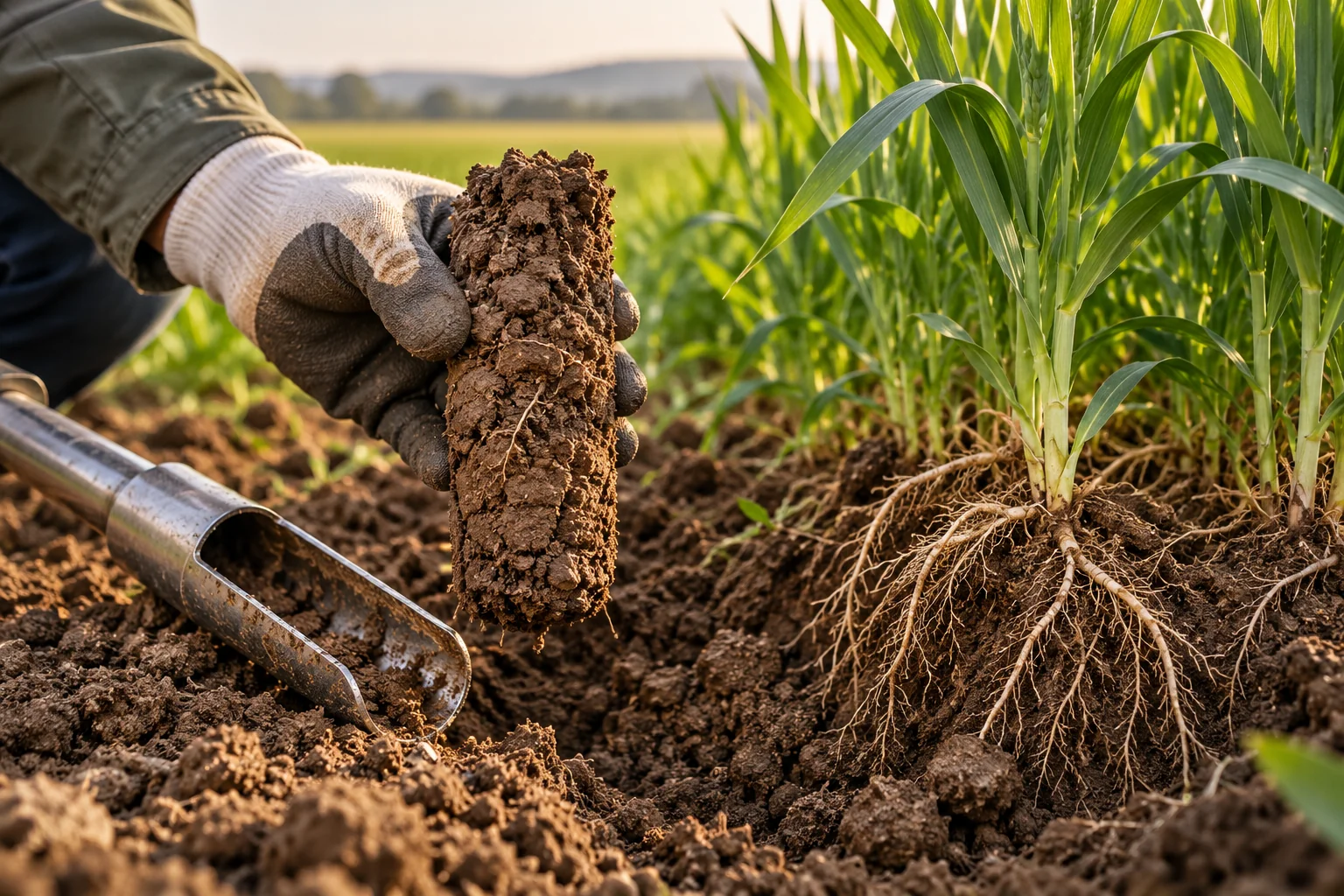
Physical indicators may help a team consider questions about soil structure, aggregation, water movement, surface condition or compaction risk. Chemical indicators provide context around properties such as pH and nutrient-related measurements. Biological or organic-matter-related measures may help frame questions about biological activity, carbon inputs or the conditions that support soil organisms.
The categories interact in the field. However, interaction is not the same as diagnosis. A biological measure does not independently prove why a crop performed poorly. A physical measure does not establish whether a chemical condition is responsible for a field pattern. A reported value must first be understood in relation to its laboratory procedure, sample preparation and reference system.
The USDA NRCS recommended indicators and laboratory procedures describe laboratory data as a supplement to in-field assessment rather than a replacement for it. This is a useful operating principle: use laboratory results to focus inspection and discussion, not to bypass them.
Some inherent soil properties also affect the range of values that may be attainable or expected. NRCS notes that conditions including texture and pH can shape soil health test results. A number should therefore be read with its soil context attached. Comparing a sandy soil directly with a finer-textured soil, for example, may create an apparent performance gap that is largely a difference in inherent conditions rather than management.
Choose the comparison before calling a result high or low
Words such as “high,” “low,” “improving” and “declining” require a stated comparison. Without one, they are often only impressions.
A practical hierarchy of comparisons is:
- The same managed location over time. This can be the most useful basis for monitoring if the sampling position, depth, timing, method and laboratory reporting approach are sufficiently consistent.
- Comparable soils and landscape positions. Where same-site history is unavailable, compare locations with similar soil type, slope or hillslope position, land use and crop context.
- The assessment system’s stated reference group. If a laboratory or framework provides reference categories, read the conditions behind them before using the category in a decision.
- Broad external comparisons. These may be useful for background, but they are usually the weakest basis for a field-level conclusion.
University of Minnesota material on selecting soil health indicators similarly recommends choosing a comparison standard, such as similar landscapes or a baseline collected from the same location before a management change. It also highlights soil type and hillslope position as relevant context.
Timing matters as well. The Cornell Comprehensive Assessment of Soil Health manual advises, where possible, comparing samples collected at a similar time of year. This does not eliminate variation, but it reduces one avoidable source of difference.
Avoid treating results from unlike fields, climates, crop systems or laboratory methods as directly comparable. A composite score can be convenient for communication, but convenience does not make it a transferable benchmark. The reference population, indicators and calculation method should remain visible whenever scores are discussed.
Check sampling conditions and field observations before interpreting a pattern
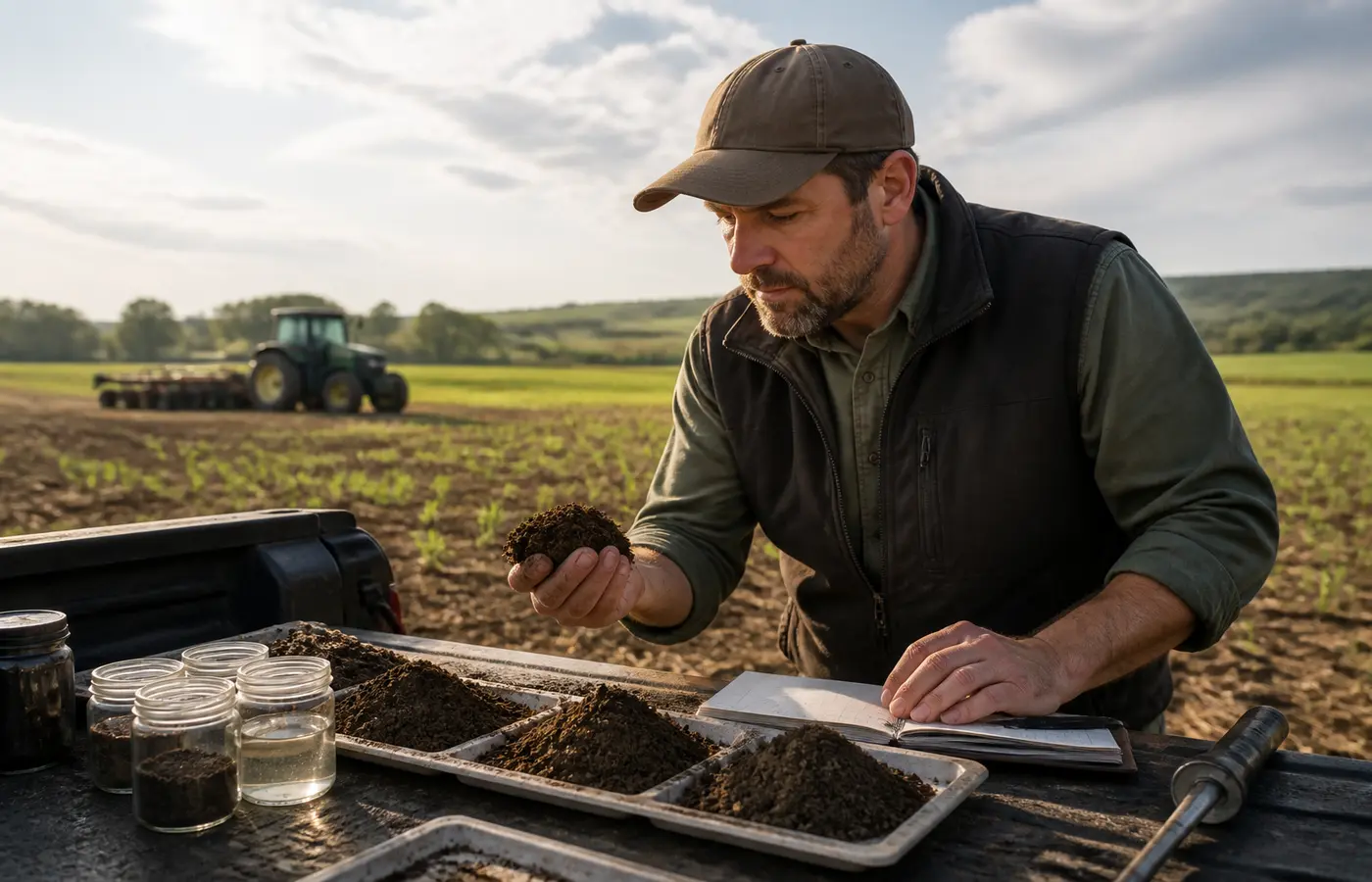
The laboratory report is only one part of the assessment record. Before deciding that a pattern is real or management-related, review how and when the sample was obtained.
A useful review includes:
- sampling date and approximate time of year;
- depth and sampling procedure;
- field, management zone or mapped area represented by the sample;
- whether the sample combined a consistent area or mixed unlike locations;
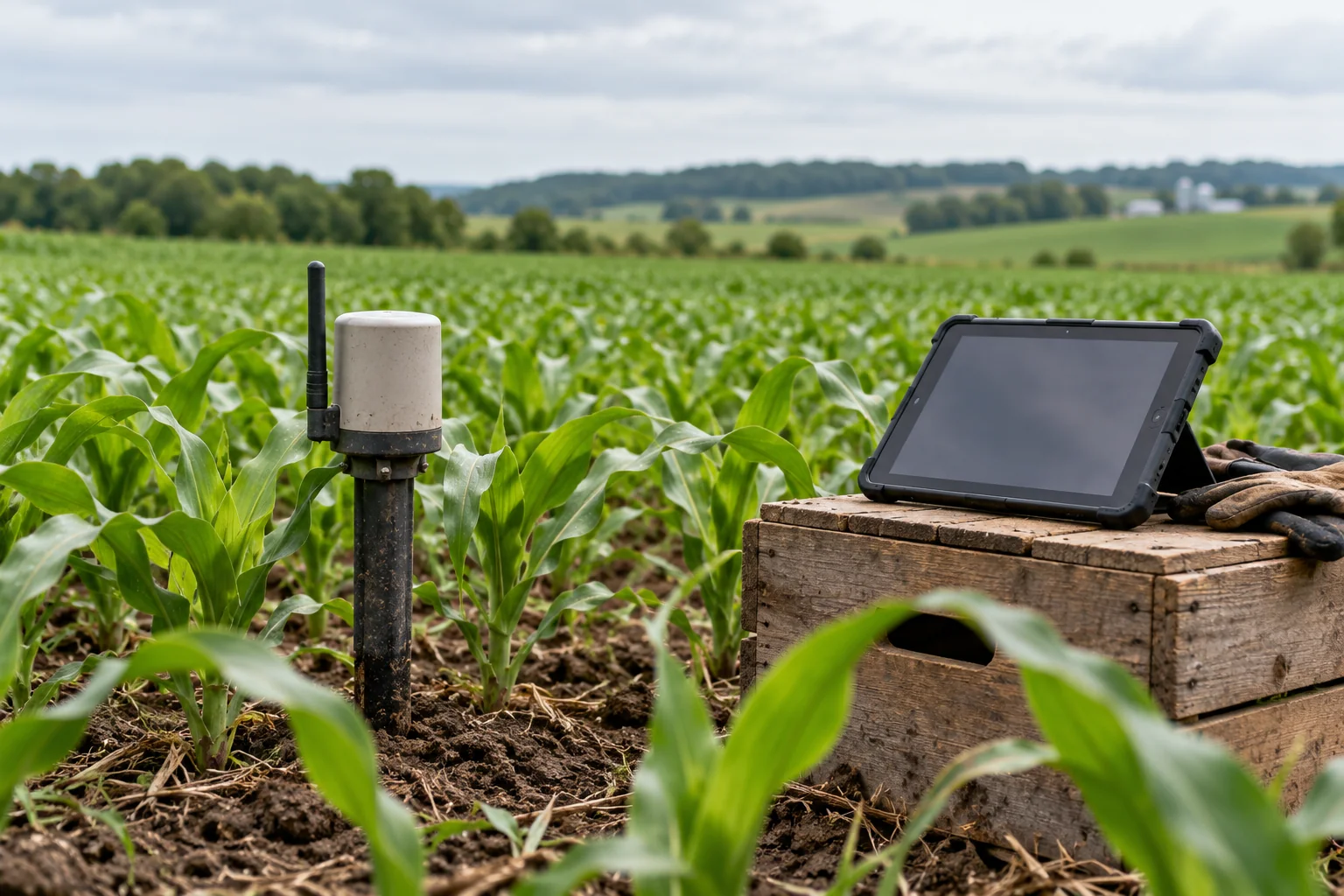
- recent rainfall, irrigation or unusual moisture conditions;
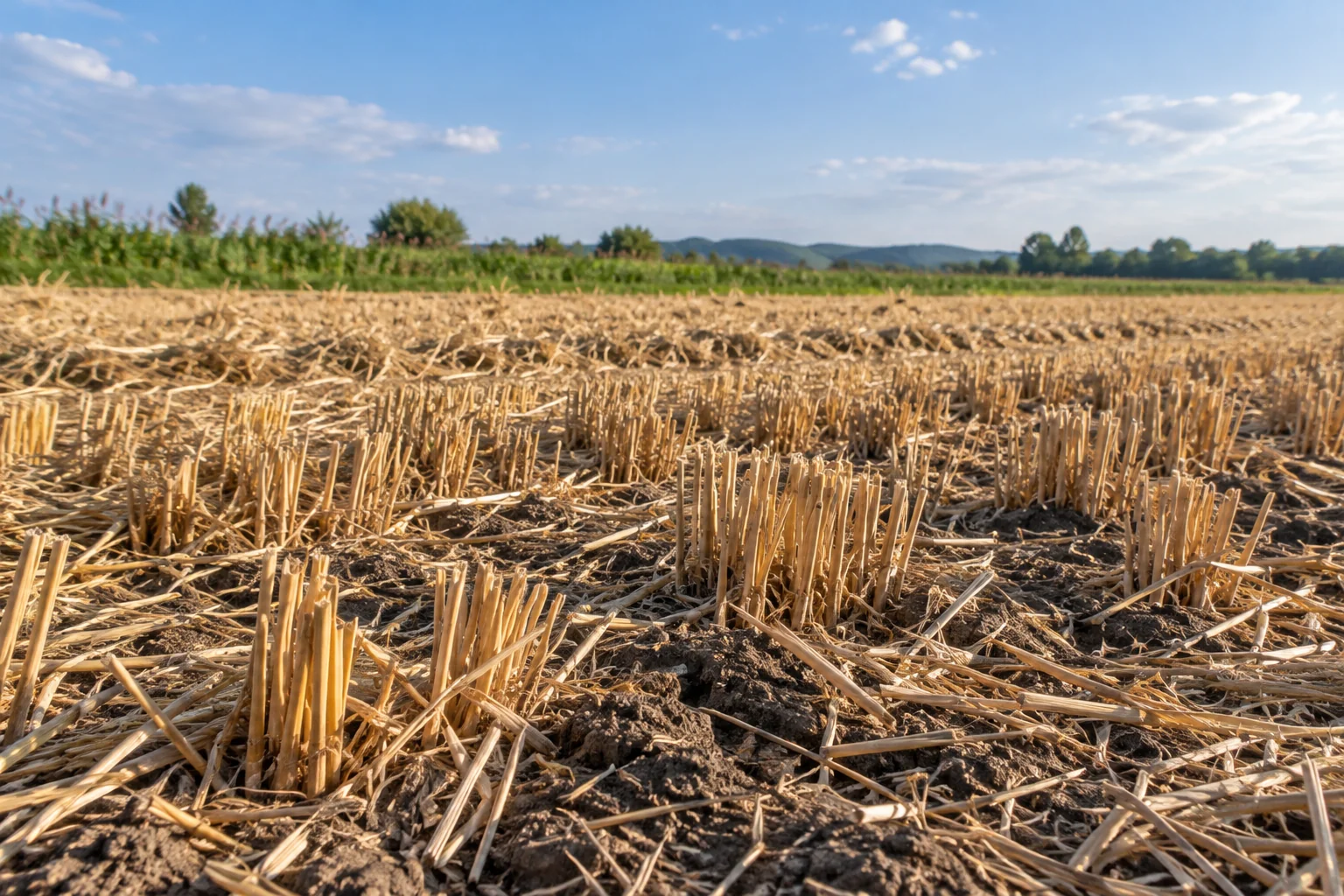
- crop stage, residue cover and visible plant condition;
- recent cultivation, traffic, harvest activity, amendments or other disturbance;
- known soil boundaries, drainage differences or slope positions; and
- the laboratory method, units and reporting basis for each indicator.
These observations are not assessment results. They are context that helps determine whether a result is representative and what should be checked next.
The UMass Soil Health Kit Guidebook describes soil health measurements as snapshots affected by season, weather and natural sampling variation. It also notes that site-scale observations can provide a reality check when a measurement is unexpected.
For example, an unexpected physical-condition result should prompt a review of soil moisture at the time of sampling and a targeted field inspection. It should not automatically become a field-wide conclusion. Similarly, a highly variable measure may require more carefully designed sampling before a team uses it to distinguish management zones.
Treat conflicting indicators as a follow-up question, not a failed test
Mixed results are common in multi-indicator assessments. One indicator may suggest a question about physical condition while another appears consistent with the site’s reference group. This is not necessarily evidence that the assessment failed. It may show that the field has different processes, different zones or incomplete context in the current record.
Do not force conflicting results into an overall rating. Instead, document the pattern and identify the smallest useful follow-up.
The table below is an ACA interpretation workflow, not an institutional scoring system or diagnostic protocol.
| Indicator group | Observed result | Comparison basis | Field context to check | Follow-up question |
|---|---|---|---|---|
| Physical | Record the reported measure and units | Same zone in a prior sample, or comparable soil position | Moisture, traffic, surface condition, rooting observations | Does a focused in-field inspection support the concern? |
| Chemical | Record the reported measure and method | Laboratory reference group or comparable soil context | Soil pH context, amendment history, crop and sampling depth | Is the value being interpreted on the correct reporting basis? |
| Biological | Record the reported measure and method | Same location and season where possible | Residue, living cover, crop stage, moisture and recent disturbance | Would repeat sampling or more field context improve confidence? |
Where indicators appear to conflict, first check whether they were sampled, calculated and interpreted on compatible bases. Then review the field record. If uncertainty remains, identify a specific next action: inspect a mapped zone, separate unlike areas in the next sampling round, repeat a sample under more comparable conditions, or seek locally appropriate technical support.
This approach preserves uncertainty without making the assessment unusable. The result becomes a documented question for follow-up rather than an unsupported management prescription.
Record the assessment so the next comparison is more useful
The value of a soil health assessment increases when it becomes part of a repeatable record. Keep the laboratory report with the sampling map or zone description, date, depth, method, field observations, recent management events, comparison basis and questions raised by the result.
The NRCS indicator guidance notes that repeated data from the same field can be used to monitor soil health, while also recognising that this requires a baseline and samples collected over a number of years. A trend is more credible when the team can show what was held consistent and what changed.
For the next sampling cycle, choose one bounded improvement rather than trying to solve every uncertainty at once. You may decide to separate two distinct landscape positions, photograph a recurring field pattern, use the same sample depth and timing, or add a specific observation to the field record. That small improvement can make the next comparison more useful than another isolated score.
Questions readers commonly ask
Can one soil health score tell me what action to take?
No. A composite score may summarise a particular assessment framework, but it does not replace the underlying indicators, the laboratory method or the field context. Use it as a prompt for review, not as a stand-alone instruction.
Why can two fields have different soil health assessment results?
They may differ in inherent soil properties, texture, pH, landscape position, crop and land-use history, weather around sampling, management history or sampling design. A difference is a starting point for comparison, not proof that one field has been managed better.
How should I compare soil health results from different years?
Use the same managed location where possible and document sampling depth, timing, laboratory method and field conditions. Comparisons made at a similar time of year are generally easier to interpret than comparisons made under very different seasonal conditions.
What should I do when a laboratory result does not match what I see in the field?
Retain both observations. Check sampling conditions, the represented area, spatial variation and the laboratory reporting basis. Then plan a focused follow-up, such as inspecting the mapped area, reviewing records or taking a better-defined sample. The mismatch may reveal a sampling limitation, a temporary condition or a question that needs more than one indicator to answer.
Source and further reading
ACA’s practical examples and working checklists are independent editorial analysis. The linked source provides the underlying reference; it does not endorse this article.